The Import Tax Expiring July 24 Has Cost the Average Household Up to $1,500. What Comes Next Is Unclear.
The Section 122 blanket tariff — a 10% charge on most imports — expires July 24, 2026. Yale Budget Lab estimates it's costing families $1,200 to $1,500 a year. Whether it disappears, gets renewed, or gets replaced is an open question.
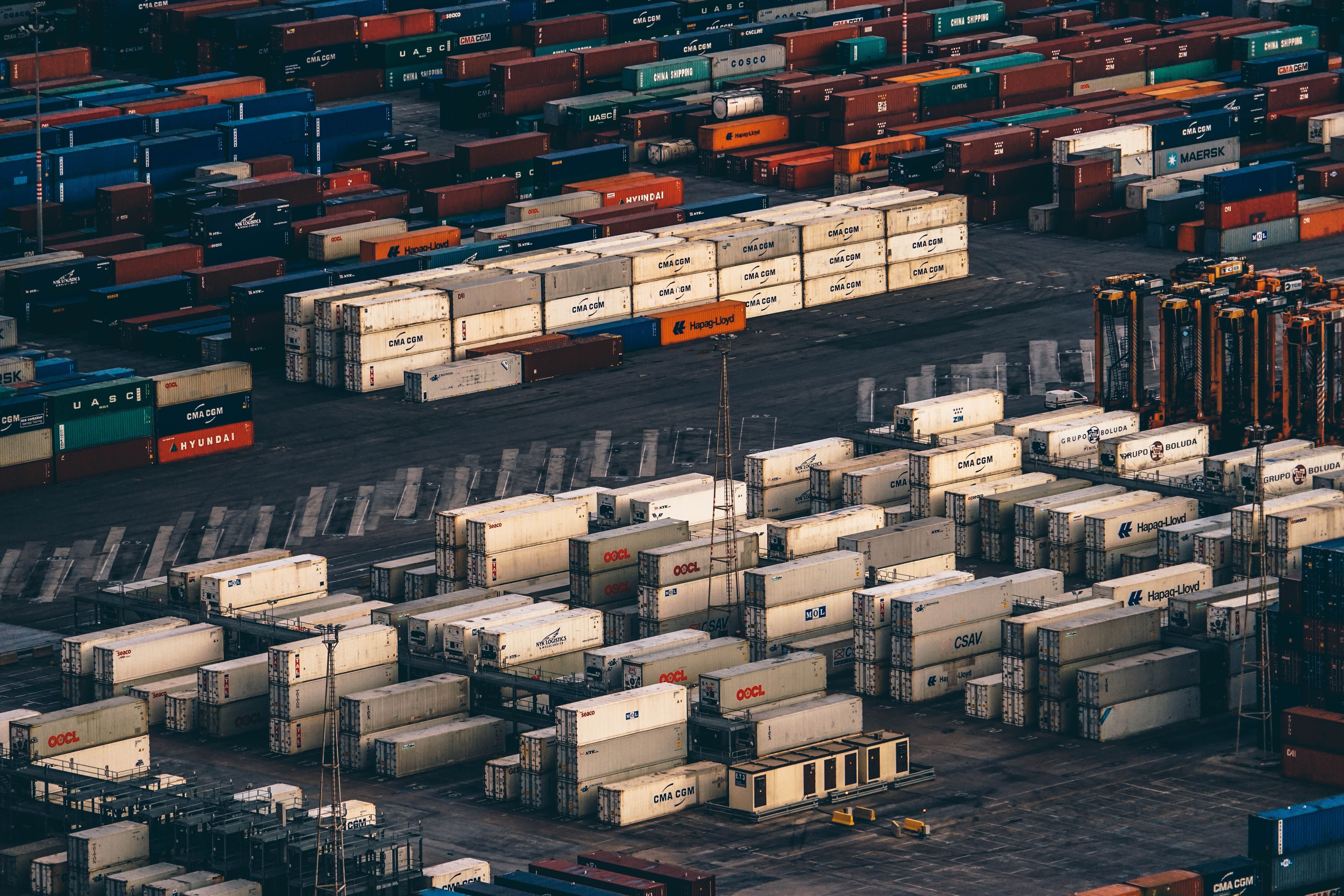
Stacks of colorful shipping containers at a port — Photo: Igor Ovsyannykov (CC0)
By DopeCalculators Team
Published June 27, 2026
On July 24, 2026, the 10% blanket tariff that the Trump administration imposed on most imports under Section 122 of the Trade Act of 1974 is scheduled to expire automatically. That's 27 days from now. Congress hasn't voted to extend it. The White House hasn't announced a clear replacement. A federal court already ruled the tariff unlawful in May, though an appeals court allowed collection to continue while the case is appealed. What happens after July 24 is genuinely uncertain.
What isn't uncertain is what these tariffs have cost. The Yale Budget Lab has tracked the household impact throughout 2026. Their estimate: if the Section 122 tariffs expire as scheduled, the average household loses $760 to $940 per year in purchasing power, driven by the other tariffs that stay in place no matter what. If Congress votes to extend them or make them permanent, the loss climbs to $1,200 to $1,500 per year per household, in 2025 dollars.
The difference between those two scenarios is roughly $740 per household per year.
What Section 122 Actually Is
The Section 122 tariffs took effect February 24, 2026, at 10%, and were later raised to 15% in some categories. They operate as a surcharge applied on top of existing import duties, hitting goods from nearly every country. The legal authority for them, Section 122 of the Trade Act of 1974, allows the president to impose a tariff surcharge for balance-of-payments reasons, capped at 15% and limited to 150 days.
That 150-day clock runs out July 24.
On May 7, the U.S. Court of International Trade issued a divided ruling finding the tariffs unlawful. The administration appealed immediately, and the U.S. Court of Appeals for the Federal Circuit granted a stay, meaning the government kept collecting them while the legal challenge plays out. As of June 27, they remain in effect.
The administration has signaled it would prefer to replace Section 122 with a permanent statutory replacement — likely an expansion of the Section 232 tariffs that cover steel, aluminum, copper, and automobiles — rather than let the tariffs quietly expire. But no legislation has passed.
What's Already in Place, Regardless
Even if Section 122 disappears on July 24, two other tariff systems stay fully in place.
Section 232 tariffs cover steel, aluminum, and copper at 50%, and automobiles at 25%. Those rates are not scheduled to change. In early June, the White House modified the Section 232 structure slightly, adding agricultural equipment, HVAC systems, and certain industrial machinery to a reduced 15% tier, and capping total duties at 15% for imports from the EU, UK, Japan, South Korea, and several other allies. The core rates on everything else remain.
Section 301 tariffs on Chinese goods also stay in place. Those have been building for years and are separate from the Section 122 action entirely.
Together, these existing tariffs pushed the average effective rate on U.S. imports to 11.7 to 11.8 percent by April 2026, according to Yale Budget Lab estimates. That's the highest since the early 1940s. The Section 122 expiration would bring the rate down somewhat, but not back to the pre-2025 baseline of around 2.1%.
What It's Done to Prices
The pass-through from importer to consumer is real, though not immediate. Goldman Sachs estimated earlier this year that businesses were passing roughly 55% of tariff costs to consumers, with that share expected to climb to 70% as pre-tariff inventory runs out and contracts renegotiate.
By product category, the impact has been uneven.
Cars: New vehicles with significant imported components have risen an estimated $3,000 to $5,000. The 25% Section 232 tariff on automobiles and auto parts is a major driver. BMW announced price increases on certain 2026 models citing tariff exposure. Domestic manufacturers with complex international supply chains have seen similar cost pressures.
Electronics: Smartphones, laptops, and televisions heavily sourced from China are up 8 to 12% at retail, with some stores posting "supply chain adjustment" fees rather than raising sticker prices directly.
Groceries: The effective tariff on food imports was running around 9% in late 2025. That rate fluctuated through early 2026 as country-specific deals and exemptions were negotiated, but upward pressure on grocery costs has been consistent. Seventy-three percent of Americans across party lines have said in surveys they're worried about being able to pay for groceries, according to Council on Foreign Relations polling.
Clothing and footwear: Estimates range from 3.6% to 7.5% higher, depending on whether Section 122 tariffs are eventually made permanent.
Consumer electronics from China: Yale Budget Lab specifically modeled short-run price increases for consumer electronics at 18% in some categories, settling to around 5% long-run after supply chains adjust.
The Burden Is Not Distributed Evenly
One consistent finding across analyses: tariffs hit lower-income households harder than higher-income ones. Yale Budget Lab describes them as regressive. The reason is straightforward — lower-income households spend a larger fraction of their income on goods, especially necessities like food and clothing. The burden on households in the bottom income decile is roughly three times the burden on those in the top decile, when measured as a share of income.
For a household earning $40,000 a year, a $760 to $940 annual hit represents nearly 2% of income. For a household earning $200,000, the same dollar amount is under 0.5%. The tariff cost is the same in dollars but very different in practical weight.
What Happens on July 24
There are three realistic paths:
The Section 122 tariffs expire and are not replaced. This reduces the effective tariff rate from 11.7% back toward something closer to 4 to 5%, with Section 232 and Section 301 tariffs remaining. Household costs would settle in the $760 to $940 annual range rather than $1,200 to $1,500.
Congress passes legislation to extend or make Section 122 permanent. This is procedurally possible but faces uncertain vote counts. If it passes, current cost levels continue.
The administration replaces Section 122 with an expansion of Section 232 authority covering a broader range of goods. This would maintain something close to the current effective rate without relying on the 150-day statutory cap that's causing the current uncertainty. The White House has signaled this is its preference, but nothing has been enacted.
Meanwhile, the Federal Circuit appeal of the CIT's May ruling continues regardless of what Congress does. If the courts eventually invalidate the tariffs, importers could seek refunds on duties already paid — a scenario that has kept customs lawyers busy since May.
How to Think About Your Budget
The tariff cost doesn't show up as a line item on your receipt. Unlike a state sales tax, you won't see "tariff surcharge" next to your total. The cost is embedded in the price of goods before they reach the shelf, which makes it harder to track but no less real.
One way to put it in context: the effective tariff rate of 11.7% is now higher than the state sales tax rate in 45 states. If your state charges 6% sales tax, you're effectively paying twice that in embedded import duties on goods that cross the border — it just doesn't appear on the receipt. You can use our sales tax calculator to compare your state's visible tax rate to what you're paying invisibly through tariff pass-through.
A second way to think about it is through purchasing power. If your household budget hasn't changed but you're spending $760 to $1,500 more on the same basket of goods, that's the functional equivalent of a wage cut. Our inflation calculator can show you exactly how that kind of sustained cost increase compounds over time — and how much your income would need to rise just to break even.
The July 24 deadline matters because it's one of the few concrete moments where the trajectory of household costs could actually change. Whether it does is an open question with less than four weeks left on the clock.
Sources: Yale Budget Lab — Tracking the Economic Effects of Tariffs; Yale Budget Lab — State of U.S. Tariffs: April 8, 2026; Skadden — U.S. Trade Court Strikes Down Section 122 Tariffs; C.H. Robinson — Updates to Section 232 Tariffs (June 2026); Tax Foundation — Tracking the Trump Tariffs; Council on Foreign Relations — Tariffs and Affordability Poll