Warsh Speaks Friday at Jackson Hole. A September Rate Hike Is Now One-in-Three. Here's What That Means for Your Mortgage.
The Kansas City Fed's annual symposium opens Thursday in Wyoming. New Fed Chair Kevin Warsh delivers his inaugural keynote Friday morning, 19 days before the September 16 rate decision — and three sitting FOMC members already voted to hike last month.
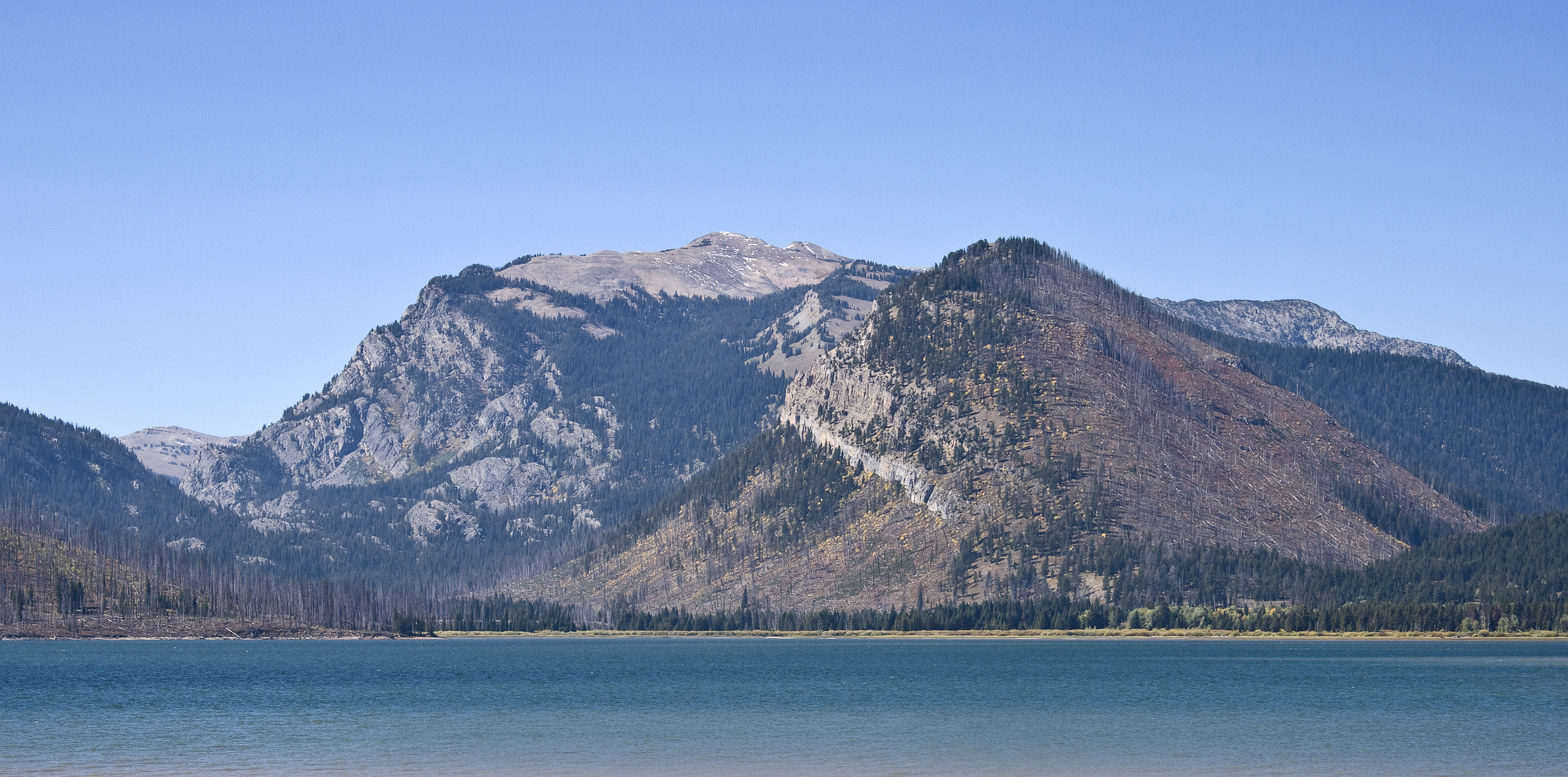
The Northern Teton Range rising above Jackson Lake in Grand Teton National Park, Wyoming — site of the Federal Reserve's annual Jackson Hole Economic Symposium — Photo: Acroterion / CC BY-SA 4.0
By DopeCalculators Team
Published August 23, 2026
The Kansas City Fed's annual Economic Policy Symposium kicks off Thursday, August 27, in Jackson Hole, Wyoming. New Fed Chair Kevin Warsh delivers his first keynote as chair on Friday morning, August 28. The September 16 FOMC rate decision is 19 days away.
Those three facts, together, make this particular Jackson Hole more market-moving than usual — and more relevant to anyone sitting on a mortgage decision right now.
Where Things Stand
At the July 29 FOMC meeting, the Fed held its benchmark rate at 3.50%–3.75% for the fifth consecutive meeting. The vote was 9–3 to hold. Three committee members dissented, explicitly preferring to raise rates by 25 basis points. Three dissents at a hold meeting — at only Warsh's second meeting as chair — is unusual. It signals that a meaningful faction of the Fed's voting bloc thinks the current rate is already too low given where inflation is sitting.
Markets have been trying to read the September tea leaves ever since. As of this week, futures markets are pricing roughly a one-in-three probability of a 25-basis-point hike at the September 16 meeting. That's not a coin flip, but it's not negligible either.
Inflation is the reason the question exists at all. The Fed's preferred measure, PCE inflation, ran at 4.1% year-over-year in its most recent reading — its highest since 2023, and more than two full percentage points above the 2% target. Elevated oil prices, driven partly by disruptions near the Strait of Hormuz, have pushed energy costs higher and kept overall inflation sticky. The Fed has been holding, not cutting, for the better part of a year. A chunk of the committee thinks holding is already a mistake.
What Warsh Is Expected to Say (and Not Say)
Warsh has spent his first few months as Fed chair deliberately saying less than his predecessors. He's shortened forward guidance, removed specific rate forecasts from the dot plot, and given short answers at press conferences. His track record since taking office in May 2026 is one of studied ambiguity, which makes parsing a Jackson Hole keynote harder than usual.
A survey of fund managers found that 69% expect his Friday speech to strike a neutral tone — neither signaling a September hike nor ruling one out. The symposium theme this year is "Financial Innovation: Implications for Payments and Policy," which suggests Warsh might use the occasion to address structural questions about monetary frameworks rather than September rate guidance specifically.
There's also talk that Jackson Hole could mark the beginning of a formal review of the Fed's 2020 Average Inflation Targeting framework — a potential shift back to a strict 2% target rather than the "make up for past undershoots" approach. If Warsh signals that kind of framework change, it would be more hawkish in the long run, even if the Friday speech doesn't commit to a September move.
In short: the baseline expectation is that Warsh says something thoughtful and avoids giving markets a clean signal. But first-time keynotes from a new Fed chair at Jackson Hole get scrutinized harder than routine ones, and 2026 has been an environment where every piece of language gets read twice.
What This Means for Mortgage Rates
The 30-year fixed mortgage rate averaged 6.67% in the Freddie Mac survey for August 13. In the days since, as Treasury yields climbed toward 4.75%, some trackers put the rate closer to 6.83%. Either way, you're in a band between 6.67% and 6.85% depending on your lender, credit score, and loan type.
That range would be affected differently depending on what happens Friday and then September 16:
- Warsh signals hold or neutral tone: Rates likely stay roughly where they are through September. Mortgage markets have already priced in significant Fed uncertainty; a neutral speech doesn't add much.
- Warsh signals hawkish tilt (or September hike looks more likely after Friday): Treasury yields would likely rise, pulling mortgage rates up with them. The 30-year fixed could push toward 7.0%–7.1% before the September meeting.
- September rate hike actually happens: The Fed's benchmark rate doesn't directly set mortgage rates — those follow the 10-year Treasury yield, not the fed funds rate. But a hike would signal more tightening ahead, which tends to push the 10-year higher. A 25-basis-point hike, combined with elevated yield uncertainty, could put the 30-year fixed above 7.1% heading into fall.
The base case from most forecasters is rates staying in the 6.4%–6.7% range through the end of 2026. But that forecast was made before three FOMC members publicly voted to hike last month. The tail risk — a September hike followed by further tightening — has gotten more credible, not less.
The Math at Different Rate Scenarios
On a $350,000 30-year fixed mortgage, here's what the three realistic scenarios look like in monthly payment:
- 6.67% (current Freddie Mac average): $2,250/month, $459,848 total interest over 30 years
- 7.0% (if rates drift higher through September): $2,329/month, $488,484 total interest over 30 years — $79 more per month, $28,636 more in total interest
- 7.25% (post-hike upper scenario): $2,389/month, $510,109 total interest over 30 years — $139 more per month, $50,261 more in total interest
On a $500,000 mortgage, those monthly gaps grow to $113, $198, and so on. The Mortgage Calculator lets you run any loan amount and rate combination to see monthly payment and total interest paid. Plug in your specific numbers, then adjust the rate up by 0.25 or 0.5 points to stress-test what a September hike would cost you.
If you want to see how different loan terms or extra payments affect the interest burden, the Amortization Calculator shows the full breakdown — month by month, principal vs. interest, and how much prepayment shortens the loan.
One Thing Worth Watching Friday
Warsh's speech is scheduled for approximately 10:00 a.m. ET on Friday, August 28, and will be livestreamed on the Kansas City Fed's website and YouTube. Bond markets will be watching in real time, and mortgage rates often move the same day a Fed speech causes a meaningful yield shift.
The question most analysts are focused on isn't whether Warsh says "hike" or "hold." It's whether he signals any concern about the three-member dissent — whether he validates or distances himself from that bloc's view that the current rate is already too accommodative. A speech that treats the dissenters as a minority view to be managed looks different, for rates, than a speech that suggests their reasoning is sound even if the timing wasn't right.
Most homebuyers and refinancers don't need to trade the speech. But knowing what the Fed chair says Friday morning could tell you something about whether the next two weeks are a good time to lock in a rate or a reason to wait and see what September 16 brings.
Sources: TechTimes, Regards of Wall Street, Investing Live, Fortress Mortgage Advisors, Crypto Briefing, Federal Reserve