The CPI Report Drops Wednesday. Here's What It Could Do to Your Mortgage Rate.
The 30-year fixed sits at 6.71% after Freddie Mac's latest survey. Wednesday's CPI report and the September 15-16 FOMC meeting are the two events that could move it significantly before the month is out. Here's the payment math on every scenario.
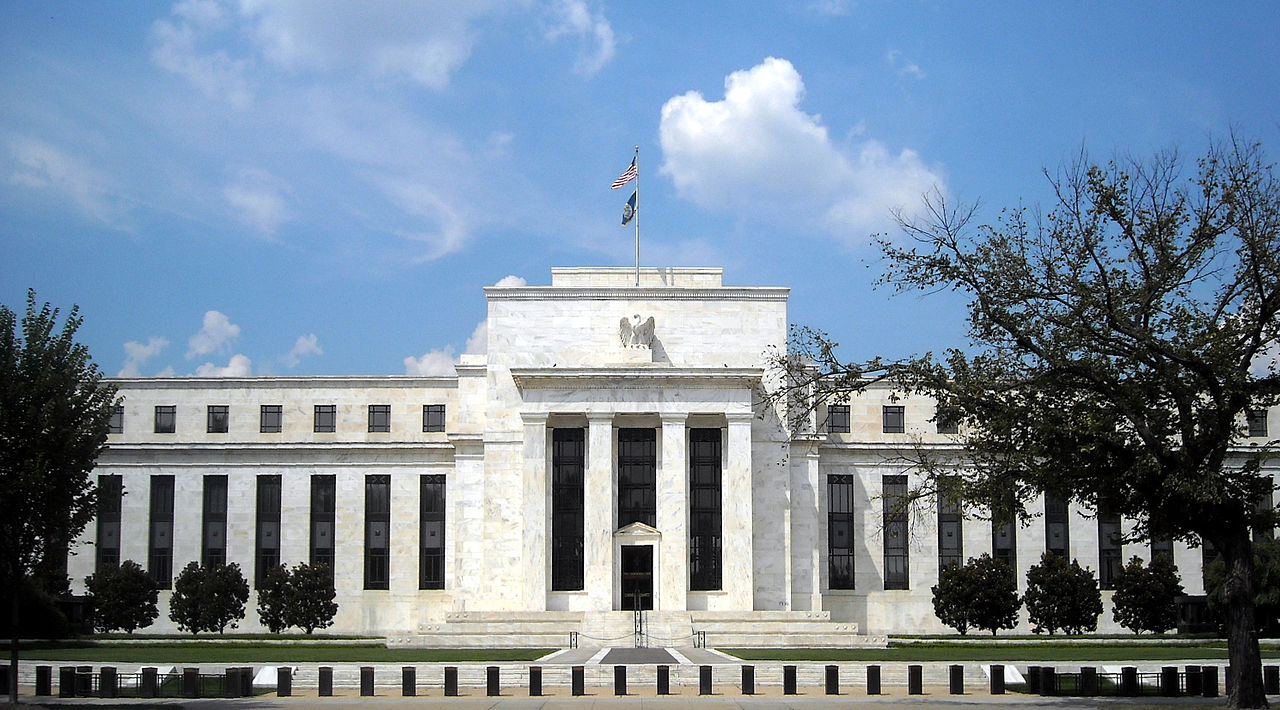
The Marriner S. Eccles Federal Reserve Board Building, headquarters of the U.S. Federal Reserve in Washington, D.C. — Photo: AgnosticPreachersKid / CC BY-SA 3.0
By DopeCalculators Team
Published September 6, 2026
The 30-year fixed mortgage rate averaged 6.71% in Freddie Mac's survey released September 3, up from 6.66% the week before. The 15-year fixed moved to 6.04%. Both ticked higher after geopolitical tensions pushed the 10-year Treasury yield back toward 4.79%.
That rate is your baseline heading into what could be the most consequential two-week stretch of 2026 for anyone with a mortgage or a home purchase in progress. The CPI report for August lands Wednesday, September 10. The Federal Reserve meets September 15-16. Together, those two events will tell the bond market — and by extension every lender in the country — whether rates hold, ease, or push higher through the fall.
What the Jobs Report Just Told Us
The August employment report, released Friday, showed 162,000 jobs added against an economist consensus that had been hovering around 53,000 to 56,000. The unemployment rate held at 4.1%. That's a labor market that's cooling but not cracking. Wage growth is barely keeping up with inflation. Labor force participation edged up to 61.6% but is still down half a point since January.
The strong jobs number made a September rate cut at the FOMC meeting less likely. Markets now price the first cut as a year-end event at best, with roughly 65% odds of one 25 basis-point reduction before December. The Fed has been holding its policy rate at 3.50% to 3.75% since April. A robust payroll number doesn't push them to cut — it gives them cover to wait for more data. Which is why Wednesday's CPI print matters so much.
Three Scenarios for Wednesday
The August CPI report covers prices through the end of last month. Analysts generally expect it to show inflation somewhere in the 3.4% to 3.6% annualized range. June came in at 3.5%. Here's how each outcome likely plays out for mortgage rates:
Cool reading (below 3.3%): A genuinely soft CPI print gives the Fed permission to cut at the September 15-16 meeting or signals strongly that a cut is coming in November. Bond yields would fall as markets price in lower short-term rates. The 10-year Treasury could pull back toward 4.5%, which would likely drag the 30-year fixed down toward the 6.4% to 6.5% range within a week or two.
In-line reading (3.4% to 3.6%): No surprises means no movement. The Fed holds, the 10-year Treasury stays in its current range, and mortgage rates drift in the 6.65% to 6.75% band they've occupied for the past few weeks. This is the base case.
Hot reading (above 3.7%): A surprise to the upside rekindles fear of a rate hike at the September FOMC meeting. Bond markets sell off, yields spike, and the spread between the 10-year Treasury and the 30-year mortgage rate widens. Rates push toward 7.0% to 7.25%. This is where it gets expensive fast.
The Payment Math on Each Scenario
Here's what those three rate bands actually cost on common loan sizes. All figures assume a 30-year fixed, no points:
$300,000 loan:
- At 6.50% (cool CPI): $1,896/month, $382,457 total interest
- At 6.71% (current): $1,936/month, $397,094 total interest
- At 7.10% (hot CPI): $2,015/month, $425,391 total interest
$400,000 loan:
- At 6.50%: $2,528/month, $509,943 total interest
- At 6.71%: $2,582/month, $529,459 total interest
- At 7.10%: $2,687/month, $567,189 total interest
$500,000 loan:
- At 6.50%: $3,160/month, $637,429 total interest
- At 6.71%: $3,227/month, $661,824 total interest
- At 7.10%: $3,358/month, $708,986 total interest
The gap between a cool CPI outcome and a hot one is $119/month on a $300,000 loan and $198/month on $500,000. Over 30 years, that difference compounds to roughly $43,000 and $71,000 respectively in extra interest paid. That's the real cost of Wednesday's inflation print.
You can run your own numbers with the Mortgage Calculator. Plug in your purchase price, down payment, and any of the three rate scenarios to see monthly payment and total interest side by side. It takes about two minutes and gives you a concrete range to work with before rates actually move.
What to Watch This Week
The CPI release is Wednesday morning, September 10, at 8:30 a.m. Eastern. Mortgage rates typically respond within hours. If you're in the middle of a purchase or refinance and waiting for rates to drop, the window between the CPI release and the FOMC decision on September 16 is when things will move — in one direction or the other.
Lenders set rates daily, sometimes intraday when volatility spikes. If the CPI comes in cold and rates drop meaningfully on Wednesday, locking quickly makes sense. If it comes in hot and rates jump, waiting for the FOMC decision on the 16th to see whether the Fed blinks is a reasonable call — though there's no guarantee they do.
If you're comparing whether to buy now versus waiting a few months, the Rent vs Buy Calculator can run those scenarios with your actual numbers — what different rate levels do to the break-even point and how long you'd need to stay in the home to come out ahead of renting.
The Middle East Factor
Oil prices remain elevated due to ongoing disruptions near the Strait of Hormuz, which has kept upward pressure on inflation and Treasury yields throughout the summer. Even a soft CPI print may not fully calm the bond market if oil stays above $100 per barrel — commodity-driven inflation is harder for the Fed to control with rate policy, and investors know it.
That's the background condition that makes Wednesday's report read differently than a typical CPI release. Investors aren't just reading the headline number; they're trying to figure out whether the underlying inflation trend is cooling or whether energy costs are going to keep pushing prices up regardless of what the Fed does. The shelter and services components of CPI will get extra scrutiny this time.
Running the Numbers Before Rates Move
Rate predictions are genuinely hard. The Bloomberg consensus estimated 53,000 August jobs and got 162,000. CPI forecasts have similarly missed in both directions this year. What you can control is having a clear picture of what any given rate means for your specific purchase or refinance — so that when rates move, you know immediately whether the new number works for you.
The Mortgage Calculator lets you model any of the three scenarios above with your actual loan size, down payment, and property tax estimate. Run all three before Wednesday morning so you know exactly where your payment lands under each outcome. That's more useful than watching rate-tracker apps in real time and trying to decide when to move.
Sources: Freddie Mac via GlobeNewswire, Fox Business / BLS August jobs report, Mortgage Daily rate forecast, The Mortgage Reports