BMI Mislabeled More Than Half of 'Overweight' Adults. A New Study Proves It.
A new Italian study presented at the European Congress on Obesity finds BMI misclassifies over one-third of adults. Here's what the gold-standard DXA scan shows instead.
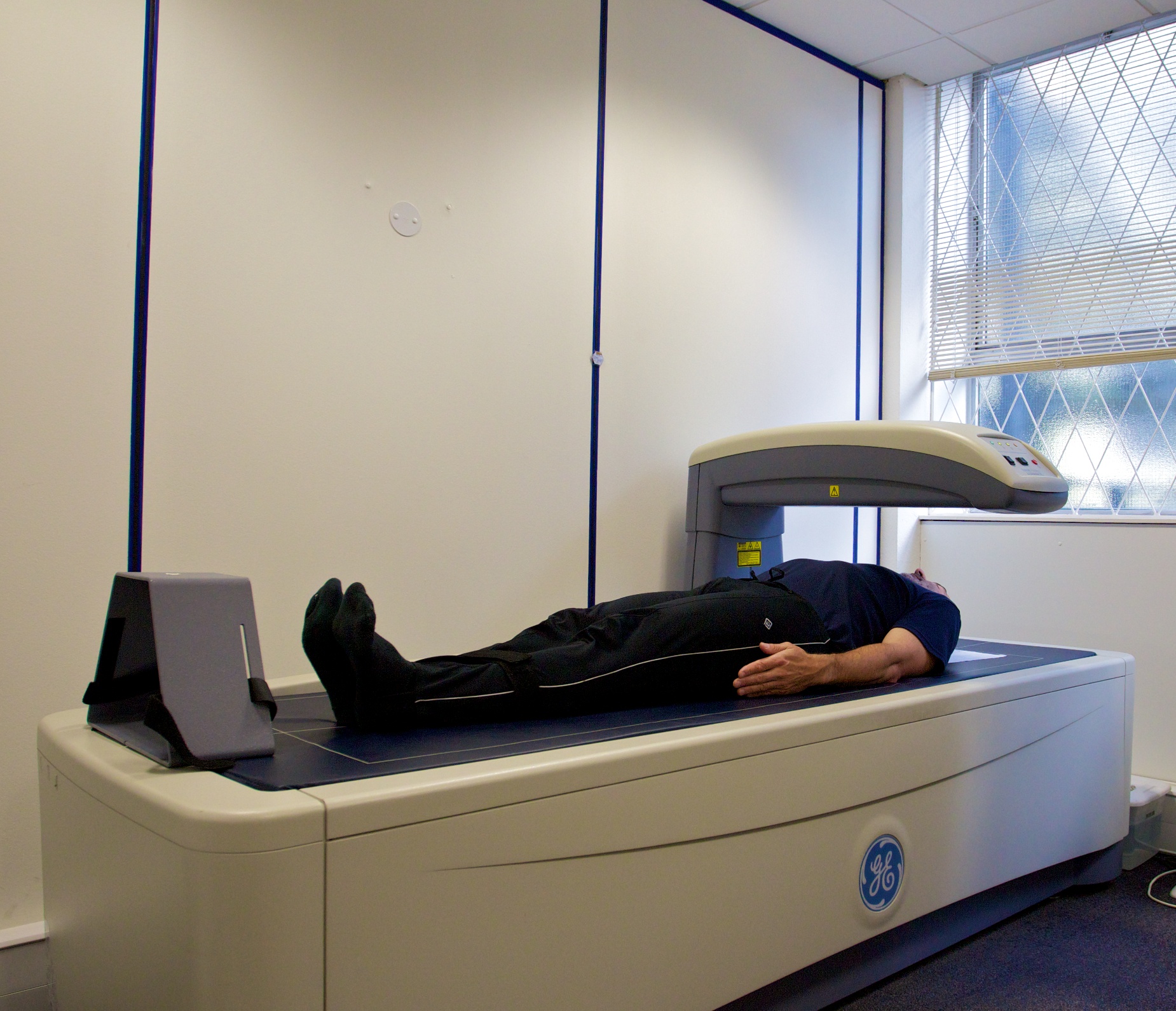
A patient undergoing a DXA scan, the gold-standard body composition measurement used in the BMI study
By DopeCalculators
Published May 11, 2026
If you've ever been told your BMI puts you in the "overweight" category and thought something felt off about that, you might have been right. A study presented this week at the European Congress on Obesity in Istanbul found that more than half of adults labeled overweight by BMI don't actually belong there, at least not when you use a more accurate measuring tool.
The research, published in the journal Nutrients and led by Professor Marwan El Ghoch at the University of Modena and Reggio Emilia, measured 1,351 adults in Italy using dual-energy X-ray absorptiometry, or DXA. That's the same technology used to measure bone density, but it also precisely maps fat tissue versus muscle throughout the body. BMI, by comparison, is just your weight in kilograms divided by your height in meters squared. That's the whole formula.
What the numbers actually showed
When researchers compared BMI classifications against DXA body composition measurements, the disagreement was significant across every weight category:
- 53% of people classified as overweight by BMI were misclassified. Most of them actually fell into the normal weight category when measured by DXA.
- 34% of people BMI labeled as obese were actually in the overweight range by body fat measurement.
- 68% of underweight BMI classifications didn't hold up under DXA analysis.
- 22% of normal weight BMI classifications disagreed with DXA results.
The overall picture: BMI said 41% of the study group was overweight or obese. DXA said 37%. Similar totals, but the individual people those numbers pointed to were often different people entirely.
Why BMI was never designed for this
BMI was invented in the 1830s by Belgian statistician Adolphe Quetelet. He wasn't trying to create a clinical health tool. He was trying to describe the "average man" for statistical purposes. The medical establishment adopted it in the 1970s because it was cheap, quick, and required no equipment beyond a scale and a measuring tape.
The fundamental problem hasn't changed since Quetelet's time: BMI can't tell the difference between a pound of fat and a pound of muscle. A 180-pound person who lifts weights and carries most of that weight in lean muscle will have the same BMI as a 180-pound person carrying most of it as fat. The scale says they weigh the same. Their health profiles do not.
Age complicates this further. As people get older, they tend to lose muscle mass and gain fat even when their weight stays constant. A 65-year-old and a 30-year-old can have identical BMIs and very different body composition realities.
What researchers are recommending instead
Professor El Ghoch and co-author Professor Chiara Milanese of the University of Verona aren't saying BMI is worthless. They're saying it shouldn't be the only tool used to categorize weight status. Their specific recommendation is combining BMI with waist-to-height ratio measurements, which capture abdominal fat distribution more accurately and don't require expensive equipment.
DXA is the gold standard but costs $50-$200 per scan and isn't available everywhere. Waist circumference measurements and waist-to-height ratio calculations can be done at home with a tape measure and are significantly more informative than BMI alone for assessing actual health risk.
What this means if you track your BMI
BMI still has a place. It's useful as a rough screening tool at the population level, and if you're clearly at one end of the spectrum, it probably reflects something real. But if you're hovering near the overweight/normal cutoff and your BMI category feels like it doesn't match your actual health, this study gives you scientific backing for that instinct.
A few things that BMI tells you nothing about:
- Your muscle-to-fat ratio
- Where your body stores fat (visceral fat around organs is the dangerous kind)
- Your fitness level or cardiovascular health
- Bone density
- How your weight has changed over time
The European Congress on Obesity runs through May 15 in Istanbul. This study is one of dozens being presented this week that challenge how the medical community has been quantifying obesity for the past 50 years.
Run your own numbers
If you want to understand your numbers beyond just BMI, the calculators below can give you a more complete picture of what your weight actually means for your health and daily energy needs:
- BMI Calculator — Calculate your current BMI and see where it falls on the standard scale
- BMR Calculator — Your basal metabolic rate tells you how many calories your body burns at rest, which varies significantly based on actual body composition
- TDEE Calculator — Total daily energy expenditure gives you a calorie baseline based on your weight, height, age, and activity level
- Calorie Deficit Calculator — If you're working toward a specific weight goal, this shows you the daily calorie deficit needed to get there
None of these replace a DXA scan or a conversation with a doctor. But they give you a richer set of numbers to work with than a single BMI figure, which researchers have now confirmed gets the answer wrong for more than one in three adults.
Sources: ScienceDaily; EurekAlert; News-Medical.net; study published in Nutrients, DOI: 10.3390/nu17132162. Conference: European Congress on Obesity 2026, Istanbul, May 12-15.